Story
BETWEEN SHADOWS
Окт
Between Shadows: From the Folk Costume of Skopska Crna Gora to Contemporary Weaving
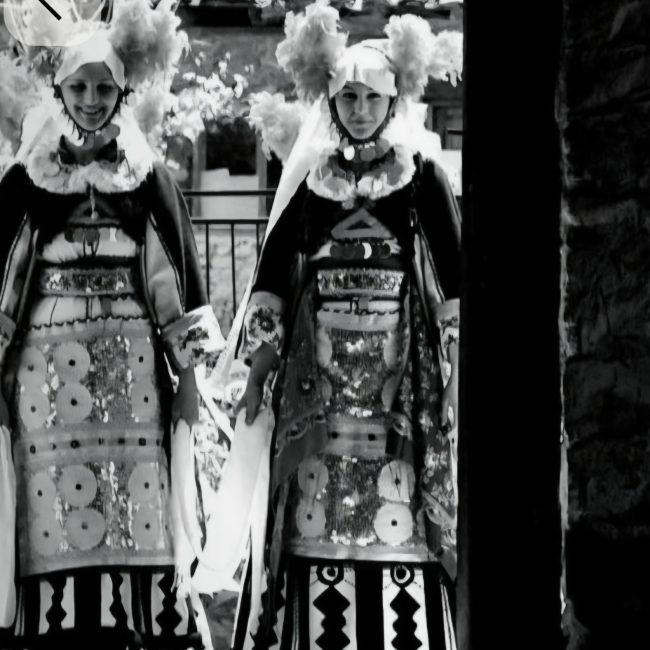
Every traditional costume carries a language of its own. It speaks through colours, ornaments, textures and patterns, preserving stories and symbols that have travelled through generations.
The inspiration for Between Shadows came from the rich ornamental tradition of the folk costume of Skopska Crna Gora. Rather than reproducing the costume itself, the intention was to explore its visual language, understand its distinctive motifs and discover how they could be transformed into contemporary textile design.
Discovering the language of ornaments
The process began with observing and studying details of the traditional costume, particularly its embroidery and geometric compositions. Every line, repetition and combination of colours offered a starting point for experimentation.
Special attention was given to traditional motifs such as kuklica and kolo. Their shapes, rhythm and visual character became important elements in developing the patterns for the collection. These motifs were not simply copied; they were examined, simplified, rearranged and reinterpreted to create a new visual vocabulary while retaining a connection to their origins.
From embroidery to weaving
One of the most important parts of the process was translating the visual richness of traditional embroidery into the structure of woven textiles.
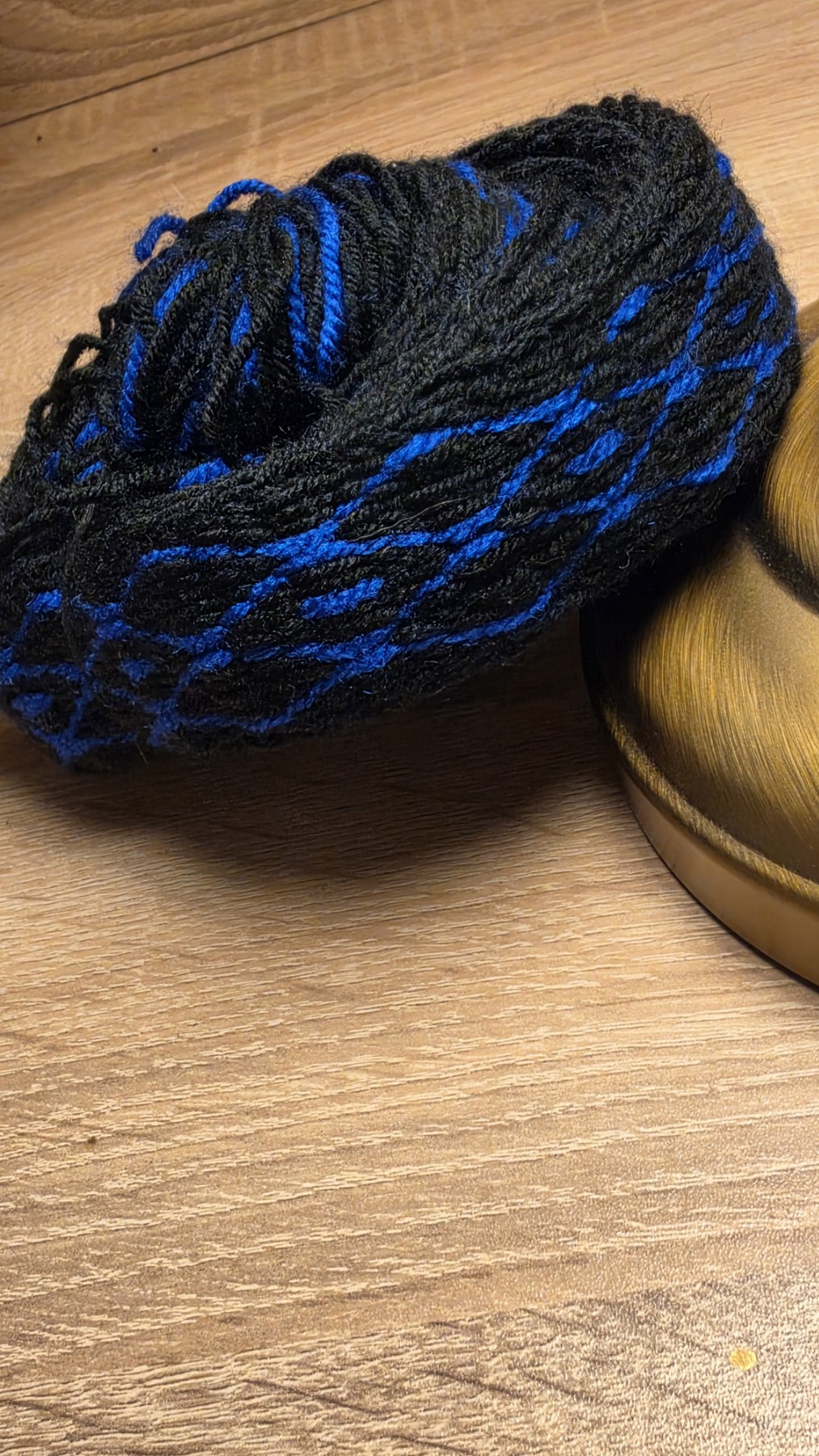
Using an inkle loom, the traditional motifs were reconstructed through carefully planned arrangements of warp threads and intricate pattern sequences. Unlike embroidery, where designs are added onto an existing fabric, inkle weaving requires the pattern to be built directly into the structure of the textile.
This meant that every motif had to be carefully designed before weaving began. The placement of each thread, the sequence of colours and the repetition of geometric elements determined the final appearance of the pattern.
The process required patience, precision and numerous experiments with colour combinations and pattern structures. Gradually, the traditional ornaments began to emerge as woven compositions, retaining their distinctive character while acquiring a new texture and rhythm.
The making of the collection
The resulting woven textiles became the foundation for a series of contemporary accessories — belts and bags that bring together traditional craftsmanship and modern design.
Each piece represents a meeting point between historical inspiration and individual interpretation. The belts preserve the linear rhythm of the woven motifs, while the bags allow the patterns to become part of a larger composition.
The intention was to create objects that can be worn and used today, while carrying a visible connection to the cultural heritage that inspired them.
An installation shaped by memory
The collection is accompanied by an artistic textile installation that expands the story beyond the finished accessories. Drawing inspiration from the ornaments, colours and visual structure of the folk costume, the installation explores the relationship between textile, space and memory.
It offers another way of experiencing the patterns — not only as decorative elements, but as fragments of a cultural language that can be reconsidered through contemporary artistic expression.
What we inherit, what we create
Between Shadows is an exploration of the space between tradition and transformation. It reflects on how traditional knowledge can inspire new creative processes without losing its connection to the past.
Through the inkle loom, familiar motifs take on a different material form. Threads become lines, ornaments become patterns, and inherited craftsmanship becomes a source of contemporary expression.
Because heritage is not only something we preserve. It is also something we continue to create.